
Elder Law Planning
Home / Legal Services / Elder Law Planning
ELDER LAW PLANNING IN KENTUCKY
Elder Law Planning for Aging, Incapacity, and the Cost of Care
Most families do not go looking for an elder law attorney. They arrive at one because something has shifted — a father who can no longer keep track of his medications, a mother whose world has quietly narrowed, a spouse who came home from the hospital needing more help than one person can give. Then come the questions nobody prepared for. Who is allowed to sign for him? What happens to the house? How long can we afford this?
Elder law planning is the work of answering those questions before they become emergencies. It brings estate planning, incapacity planning, and long-term care and Medicaid planning together into one coordinated strategy — one built to protect you while you are living, not only your beneficiaries after you are gone. At Kentucky Asset Protection, this is not a sideline. It is the whole of our practice. Attorney S. Thomas Hamilton works with families across Bardstown and Central Kentucky on exactly these situations, and the earlier we begin, the more room we have to work.
Below, we walk through what elder law planning covers in Kentucky, the documents at the center of it, what happens to families who have no plan in place, and when to start. If you would rather talk it through than read about it, request a consultation — the first conversation is about understanding your options, with no obligation.

Every family’s situation is different. The right plan depends on your health, your assets, and how much time you have — which is exactly what a first conversation is for.
What Is Elder Law Planning?
Elder law planning is a coordinated legal strategy for the second half of life. It combines the documents that decide who acts for you if you become incapacitated, the tools that protect your home and savings from long-term care costs, and the estate plan that passes what remains to the people you choose.
That definition sounds tidy. In practice, elder law is where several complicated systems collide at once — Kentucky property and probate law, federal and state Medicaid rules, tax treatment, veterans benefits, and the ordinary, unglamorous realities of a family trying to care for someone they love. A plan that handles one of those well and the others poorly is not much of a plan. A trust drafted without regard to Medicaid, a deed signed to save probate that triggers a five-year penalty, a power of attorney too narrow to do the work when the work is finally needed — we see the consequences of each of these regularly.
The point of elder law planning is to make those pieces fit together, and to do it while you still have the legal capacity to make the decisions yourself.
How Elder Law Differs from Traditional Estate Planning
People often use the two terms interchangeably, and there is real overlap. The difference is one of orientation: traditional estate planning is largely concerned with what happens at death, while elder law is concerned with the years before it — usually the expensive ones.

What estate planning answers
Who inherits your property. Who serves as executor. Who is nominated as guardian for minor children. Whether your family goes through probate, and how much of the estate that consumes. These are questions about transfer — about the orderly handoff of what you own to the people you name.

What elder law adds
Who makes medical and financial decisions during a long illness. Whether your savings survive three years of skilled nursing care. Whether the spouse still living at home has enough to live on. Whether the family land stays in the family. These are questions about protection — about what is still standing by the time the transfer happens.
Put simply: every sound elder law plan contains an estate plan. Not every estate plan contains elder law. If your documents were drafted years ago by a general practitioner and have not been looked at since, there is a fair chance they handle the first set of questions and are silent on the second.
The Documents at the Core of a Kentucky Elder Law Plan
No two plans are identical, but most Kentucky elder law plans are built from the same set of instruments. What separates a plan that works from one that does not is usually the drafting, not the list.
Durable financial power of attorney
This is the single most important document in an elder law plan, and the one most often done badly. Under Kentucky’s Uniform Power of Attorney Act (KRS Chapter 457), a power of attorney is durable — it survives your incapacity — unless the document says otherwise. But durability is not the same as usefulness. Kentucky law requires that certain powers be granted expressly, and generic forms routinely omit them. In our experience, the two that matter most are the authority to make gifts and the authority to create or fund a trust. An agent without those powers cannot carry out asset protection or Medicaid planning at the moment it is needed most — and by then, the person who could have granted them no longer has the capacity to sign.
Healthcare power of attorney and living will directive
Kentucky combines these under the Living Will Directive Act (KRS 311.621 to 311.643). The healthcare surrogate designation names the person who speaks for you when you cannot speak for yourself; the living will directive records your wishes about life-prolonging treatment and artificially provided nutrition and hydration. Choose the surrogate for temperament as much as affection — the job calls for someone who can hold a position in a hospital corridor at two in the morning.
Last will and testament
Kentucky’s execution requirements are specific (KRS Chapter 394). A will that is not entirely in the testator’s handwriting generally must be signed or acknowledged before at least two credible witnesses, who sign in the presence of the testator and of each other. A self-proving affidavit added at signing spares your family the trouble of locating those witnesses years later. Execution mistakes are among the few errors in this field that cannot be corrected after the fact.
Revocable living trust
A revocable trust manages property during incapacity, keeps assets out of probate, and keeps your affairs private. It is a genuinely useful instrument — and it does not protect anything from long-term care costs. Because you keep control of and access to the property, Medicaid generally treats it as available to you. This is the most common misconception we correct in a first consultation.
Irrevocable asset protection trust
Where protection from care costs is the goal, an irrevocable trust — drafted, funded, and administered correctly, and given enough time — is usually the instrument that does it. It involves real limits on control, and it is not right for everyone. We walk through the permitted and prohibited uses in detail before anything is signed. See how Medicaid planning works for how these trusts interact with eligibility.
Deeds and beneficiary designations
Retirement accounts, life insurance, payable-on-death accounts, and jointly titled property pass outside your will entirely. A plan is only as good as its funding: if the deeds and designations are not coordinated with the documents, the documents do not control the outcome.


Planning for Incapacity — and What Happens Without It
If an adult loses the ability to manage their own affairs and no valid power of attorney or healthcare surrogate designation exists, the family’s only remaining option is court. In Kentucky, that means a guardianship or conservatorship proceeding under KRS Chapter 387 — and it is not a formality.
A petition is filed in the district court of the county where the person lives. An interdisciplinary evaluation is ordered. Counsel is appointed. And in a feature that surprises almost every family we explain it to, the question of whether a person is disabled is tried before a six-person jury, with the trial set within sixty days of the petition and notice given at least fourteen days beforehand. Neighbors and acquaintances may sit in that jury box. If a guardian is appointed, the court’s involvement does not end — the guardian reports to the court, and significant decisions may require its approval, sometimes for the rest of the person’s life.
A properly drafted power of attorney and healthcare surrogate designation avoid all of it. They cost a small fraction of a contested guardianship, they take effect without a hearing, and they let you — not a judge, and not a jury — choose who steps in.
There is a hard deadline on this, and it is the part families most often learn too late: the moment a person no longer has the capacity to understand what they are signing, the window closes. Documents cannot be signed retroactively. If a diagnosis has been made and the paperwork has not, that is the week to call, not next month.
Where Elder Law Planning Does Its Real Work
Elder law planning is not a single product. It is a set of tools applied to whichever of these situations a family is actually facing — and most families are facing more than one.
01
Long-term care and Medicaid eligibility
Skilled nursing care in Kentucky can run well into six figures a year, and Medicare does not cover it on an ongoing basis. Medicaid does — for those who meet strict income and resource rules. Much of elder law planning is the lawful arrangement of property so that a person can qualify while keeping as much as the rules allow. Timing governs everything here: Medicaid generally reviews transfers made in the sixty months before an application, and gifts made in that window can create a penalty period. Our Medicaid planning page covers the eligibility rules in detail.
02
Protecting the spouse who stays home
When one spouse enters a facility and the other remains at home, spousal-impoverishment protections are meant to keep the community spouse from being left without enough income or resources. How much protection is actually available depends on current limits, how the couple’s property is titled, and what planning is done before the application is filed. This is one of the areas where early advice changes the number the most.
03
The house, the farm, and the land
Around Bardstown, a family’s most valuable asset is often not an investment account — it is a paid-off home, or acreage that has been in the family for generations. A home is not automatically lost when someone applies for Medicaid, but ownership affects eligibility, and Kentucky may pursue estate recovery after the recipient’s death for certain benefits paid (907 KAR 1:585). Whether a property is exempt, countable, transferable, or exposed to recovery depends entirely on the facts and on what was done in advance.
04
A child or grandchild with a disability
An inheritance left outright to someone receiving means-tested benefits can disqualify them from the very programs they depend on. A properly drafted special needs trust allows you to provide supplemental support without that consequence. The rules are technical, and the trust has to be coordinated with the benefits the beneficiary already receives or expects to receive.
05
Families already in a crisis
Not everyone gets to plan ahead. When a parent is already in a nursing facility or about to enter one, advance planning is off the table — but it is rarely too late to do anything. Crisis planning strategies can still preserve a meaningful portion of a person’s assets, depending on marital status, income, property, prior transfers, and timing. What matters is getting advice before anything is gifted, sold, or retitled.
Which of these apply to you depends on your health, your family, and what you own — and often on how much time is left before care is needed. Sorting that out is the work of a first meeting.
When Should You Start Elder Law Planning?
Earlier than most people do. The two constraints that shape every plan are time and capacity, and both run in one direction.
Time matters because the most protective strategies need to season. Transfers made within the sixty-month look-back period can create a period of Medicaid ineligibility, so a trust funded at seventy-two does work that the same trust funded at eighty-four cannot. Capacity matters because every document in an elder law plan has to be signed by someone who understands it. A diagnosis does not necessarily end that window, but it starts a clock.
In practice, the sensible moments to sit down with an elder law attorney are: at retirement or in your early sixties, while every option is still open; when a spouse or parent receives a serious diagnosis; when you begin helping a parent with money or medications; and after any of the life events below.
- Marriage, remarriage, or divorce
- The death or incapacity of a spouse, beneficiary, or the person you named as agent
- The purchase or sale of real estate, or a change in how it is titled
- A significant change in finances, or the sale of a business or farm
- A move to or from Kentucky
- A serious medical diagnosis
- A change in tax or Medicaid law
If your documents are more than three to five years old, they are worth a review even if nothing has happened. Powers of attorney in particular have improved since Kentucky adopted the Uniform Power of Attorney Act, and financial institutions are markedly more willing to accept a current, specifically drafted instrument than a photocopied form from two decades ago.

Working With an Elder Law Attorney in Bardstown
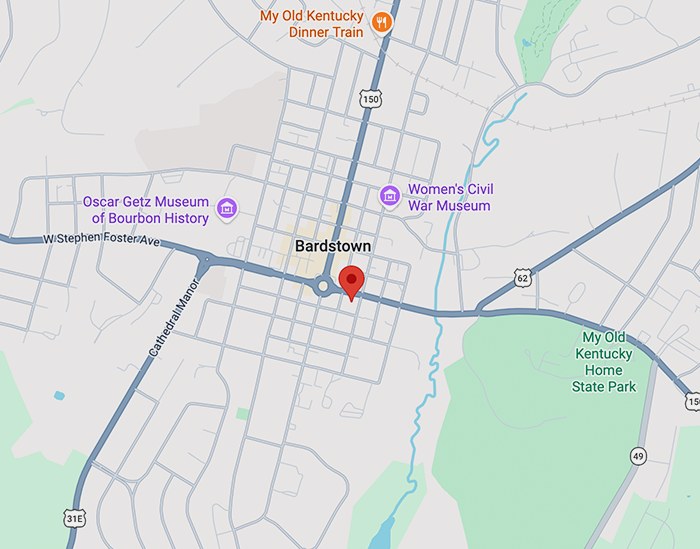
Our office is at 117 E. Stephen Foster Avenue in Bardstown, and we work with families throughout Nelson County and the surrounding Central Kentucky counties. Local practice matters more in this area of law than people expect. Guardianship petitions are heard in the district court of the county where the person resides. Probate is administered in district court as well, and the pace and expectations vary from one county to the next. Knowing the local procedures and the realistic timelines is part of giving accurate advice rather than general advice.
We also know that the person who most needs to be in the room is sometimes the person least able to get there. If health, distance, or caregiving duties make an office visit difficult, we can usually make other arrangements — including meeting at a home, hospital, or care facility. Say so when you call and we will work it out.
A first meeting is a conversation, not a commitment. We review your family circumstances, health concerns, assets, income, existing documents, and goals; we identify the planning options that fit; and we explain what each one can and cannot do before you decide anything. See the full range of our legal services, or read answers to the questions Kentucky families ask us most often.
Common Mistakes Families Make
Most of the damage we are asked to repair comes from a small number of well-intentioned decisions. These are the ones we see most.
Relying on a generic power of attorney
A form downloaded online is often either too narrow to do real planning or drafted for another state’s law. Banks and brokerages scrutinize these closely and reject them regularly. By the time the rejection arrives, it is usually too late to sign a better one.
Adding a child’s name to the deed or the bank account
It looks like the simple solution and it is one of the costliest. Adding a child as joint owner can be treated as a gift for Medicaid purposes, exposes the property to that child’s creditors and divorce, can create an unnecessary capital gains bill by forfeiting the step-up in basis, and gives away control you may still need.
Assuming a revocable living trust protects assets from nursing home costs
It does not, and the belief that it does has cost Kentucky families a great deal of money. Probate avoidance and asset protection are different objectives requiring different instruments.
Waiting until someone is already in a facility
Crisis planning can still help, but the menu is shorter and the results are smaller. Nearly every family we meet in crisis says some version of the same thing: we thought we had more time.
Leaving an inheritance outright to a beneficiary on means-tested benefits
A well-meant bequest to a child or grandchild receiving disability benefits can end those benefits outright. A special needs trust achieves the same generosity without the collateral damage.
Signing a plan and never funding it
A trust that is not funded protects nothing. Deeds must be recorded, accounts retitled, and beneficiary designations updated. We treat funding as part of the engagement rather than homework left with the client.

Elder Law Services
Each of the services below has its own page explaining what it involves under Kentucky law, who it suits, and what it costs you to wait. If you are not sure which applies to your situation, the initial consultation is free.
FREQUENTLY ASKED QUESTIONS
Some Common Questions
What is elder-law asset protection?
Elder-law asset protection is the lawful organization of property to help preserve assets while preparing for possible long-term-care expenses and Medicaid eligibility. It may involve trusts, transfers, powers of attorney, exempt assets, spousal protections, beneficiary designations, and a coordinated long-term-care plan.
What happens if I become incapacitated without an estate plan?
If you have not signed appropriate powers of attorney, your family may need to ask a court to appoint a guardian or conservator. That process can be public, expensive, and time-consuming. Proper planning allows you to choose who will make financial and healthcare decisions for you.
What is a financial power of attorney?
A financial power of attorney authorizes a person you trust—called your agent—to handle specified financial and legal matters for you. This may include paying bills, managing accounts, dealing with real estate, applying for benefits, and implementing an asset-protection plan.
Under Kentucky law, a power of attorney is generally durable unless it specifically provides otherwise, meaning it can remain effective if the principal becomes incapacitated. The exact authority given to the agent depends on the document.
Can I protect assets if I may need nursing-home care in the future?
Often, yes. Advance planning may include an appropriately designed irrevocable trust, exempt-property planning, beneficiary changes, insurance, and other strategies. The right plan depends on your health, family, assets, income, and desired level of control. Earlier planning generally provides more options.
What is a special needs trust?
A special needs trust is designed to provide supplemental support for a person with a disability without unnecessarily interfering with means-tested public benefits. Because the rules are highly technical, the trust should be coordinated with the beneficiary’s existing or anticipated benefits.
REVIEWS
Hear From Our Clients

CONTACT
Plan While You Still Have Options
The families who come out of this best are almost never the wealthiest ones. They are the ones who started early enough to have choices. If you are beginning to think about aging, incapacity, or the cost of care — for yourself or for a parent — a conversation now is worth far more than the same conversation a year from now.
Phone:
Address:
117 E. Stephen Foster Avenue, Bardstown, KY 40004